Ad Blocker Detected
Our website is made possible by displaying online advertisements to our visitors. Please consider supporting us by disabling your ad blocker.
Maintaining an industrial air compressor isn’t just about routine checks; it’s about understanding how each component contributes to overall system reliability. With proper scheduling, we can prevent costly failures and extend equipment lifespan, but the specifics—like inspection frequency and critical points—are often overlooked. Establishing a detailed maintenance plan is essential for peak performance and safety. Let’s explore how a structured approach can turn routine maintenance into a strategic advantage.
Key Takeaways
- Develop a routine schedule aligning with manufacturer guidelines for inspections, lubrication, and parts replacement.
- Regularly monitor oil, filters, and system pressures to detect issues early.
- Record maintenance activities and performance data to identify trends and optimize the schedule.
- Conduct safety checks on gauges, emergency shutoffs, and safety devices during each maintenance cycle.
- Perform troubleshooting for common issues like abnormal noises, airflow restrictions, and misalignments promptly.
Establishing a Regular Maintenance Routine for Industrial Compressors
To guarantee peak performance and longevity of industrial air compressors, establishing a consistent maintenance routine is essential. Our approach emphasizes strict adherence to lubrication routines, ensuring oil and grease levels are monitored and replenished at manufacturer-recommended intervals. Proper lubrication reduces friction, minimizes wear, and prevents overheating, directly impacting compressor efficiency. Safety protocols are equally critical; always lockout/tagout equipment before performing maintenance to prevent accidental startup. Use appropriate personal protective equipment, and verify that all safety devices are functional before inspection or servicing. Regularly documenting maintenance activities ensures accountability and early detection of potential issues. This disciplined, detail-oriented approach helps maintain ideal compressor operation, reduces downtime, and ensures compliance with safety standards.
Key Components to Inspect and Maintain Weekly and Monthly
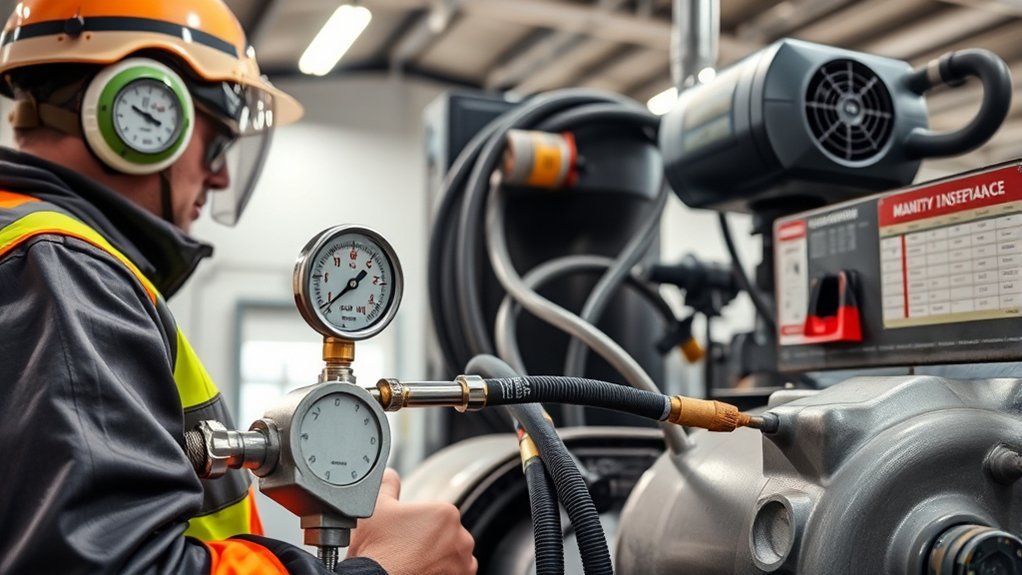
Regularly inspecting and maintaining key compressor components on a weekly and monthly schedule is essential for peak operation and preventing unexpected failures. We focus on critical areas such as:
- Lubrication protocols: Check oil levels, quality, and filter condition to guarantee proper lubrication and reduce wear.
- Safety inspections: Verify safety devices, gauges, and emergency shutoffs function correctly, adhering to safety standards.
- Air filters: Clean or replace filters to prevent contaminants from compromising system efficiency.
- Vibration and noise analysis: Monitor for abnormal vibrations or sounds indicating misalignment or component wear.
Consistent attention to these elements helps prolong equipment life and maintains peak performance, while also ensuring safe operating conditions.
Developing a Preventative Maintenance Schedule to Avoid Downtime
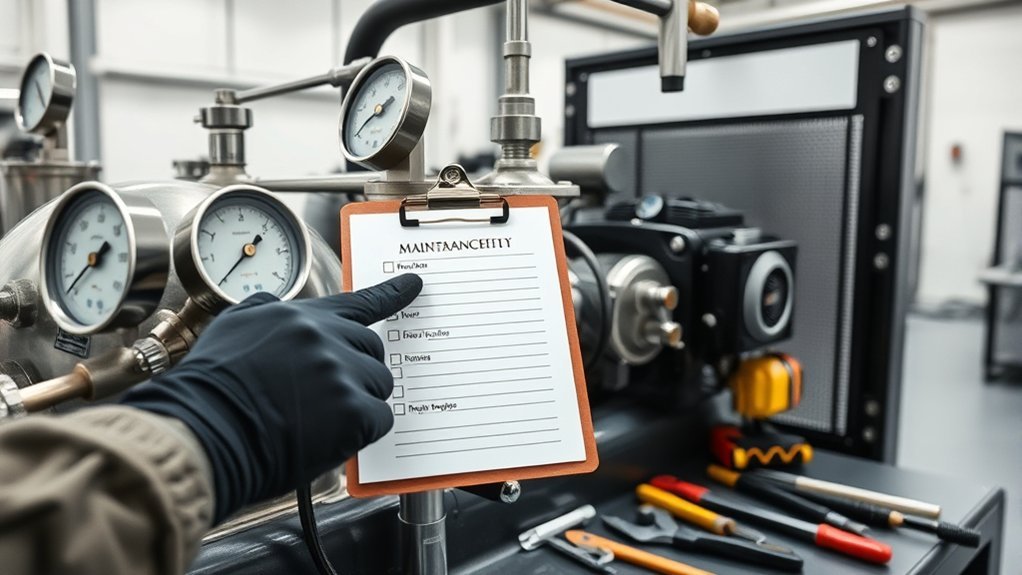
Establishing a systematic preventative maintenance schedule is essential to minimize unexpected compressor downtime and maximize operational efficiency. By scheduling regular inspections and parts replacements based on manufacturer guidelines, we ensure consistent air quality and prevent contamination that can impair performance. Monitoring key parameters such as lubrication levels, filter condition, and system pressures allows us to identify issues early, maintaining ideal air quality and reducing the risk of system failure. Additionally, routine maintenance enhances energy efficiency by preventing component degradation that causes unnecessary power consumption. Precise record-keeping and data analysis enable us to refine the schedule continuously, aligning it with operational demands and compressor usage patterns. This proactive approach not only extends equipment lifespan but also guarantees reliable, energy-efficient performance with minimal disruption.
Troubleshooting Common Compressor Issues Through Scheduled Checks
Scheduled checks are essential for identifying and addressing common compressor issues before they escalate into costly failures. Regular inspections of lubrication protocols ensure maximum friction reduction and component longevity. Noise diagnostics help detect abnormal vibrations or sounds indicating bearing wear, misalignment, or airflow restrictions. To troubleshoot effectively, we focus on:
- Verifying lubricant levels and quality, replacing or replenishing as needed.
- Listening for unusual noises during operation, pinpointing potential mechanical faults.
- Inspecting belts, pulleys, and couplings for signs of wear or misalignment.
- Checking for airflow obstructions or leaks in intake and discharge lines.
Best Practices for Documenting Maintenance and Tracking Performance
To guarantee maintenance efforts translate into measurable improvements, we must adopt systematic documentation and performance tracking practices. Effective maintenance record keeping involves detailed logs of all service activities, component replacements, and inspections, ensuring traceability and accountability. Performance monitoring requires establishing key metrics such as pressure stability, energy consumption, and cycle times, which are regularly recorded and analyzed. Utilizing digital tools or maintenance management systems streamlines data collection, making it easier to identify trends or anomalies over time. Accurate documentation allows for precise scheduling, reduces downtime, and supports predictive maintenance strategies. Consistent performance monitoring ensures compressor efficiency remains ideal, enabling proactive interventions before failures occur. This disciplined approach enhances reliability, extends equipment lifespan, and maximizes operational efficiency.
Frequently Asked Questions
How Often Should the Air Filters Be Replaced?
We recommend replacing air filters every 6 to 12 months, depending on filter lifespan and operational conditions. Regular replacement guarantees peak airflow, prevents contamination, and maintains compressor efficiency, aligning with best practices for maintenance and equipment longevity.
What Are the Signs of Compressor Oil Degradation?
We’ve seen lubricant contamination and oil viscosity change signal compressor oil degradation, like in a case where increased wear caused efficiency drops. These signs indicate the need for oil analysis to prevent costly failures and maintain peak performance.
How Can Vibration Analysis Prevent Compressor Failures?
We use vibration analysis for fault diagnosis, enabling early detection of imbalance, misalignment, or bearing wear. Vibration monitoring helps us prevent compressor failures by addressing issues proactively, ensuring continuous operation and minimizing costly downtime.
What Safety Precautions Are Essential During Maintenance?
During maintenance, we guarantee safety by wearing proper personal protective equipment, following strict lockout procedures, and verifying energy isolation. This minimizes risk of injury, prevents accidental startup, and maintains a secure environment for technicians working on compressors.
How Do Ambient Conditions Affect Compressor Performance?
Ambient temperature and humidity levels directly impact compressor efficiency; high temperatures cause overheating, while elevated humidity can lead to condensation and corrosion, reducing lifespan. We monitor these conditions closely to optimize performance and prevent operational issues.
Conclusion
By adhering to a meticulous maintenance schedule, we keep the heartbeat of our industrial operations steady and reliable. Regular inspections and precise record-keeping act as our diagnostic toolkit, sharpening our ability to detect issues early—like a watchful eye scanning for subtle shifts. This disciplined approach guarantees our compressors run smoothly, preventing costly downtime and extending equipment life. In the end, consistent care transforms complex machinery into a finely tuned engine of productivity, ready to meet any challenge.