Ad Blocker Detected
Our website is made possible by displaying online advertisements to our visitors. Please consider supporting us by disabling your ad blocker.
Think of an air compressor as the heartbeat of a manufacturing process—when it’s well-maintained, everything runs smoothly; when neglected, failures can cause costly downtime. Regular maintenance is vital to guarantee peak performance, safety, and longevity. We’ve compiled a thorough checklist that covers critical inspections, adjustments, and troubleshooting steps. Skipping these tasks can lead to inefficient operation and unexpected breakdowns; understanding the key components and procedures can make all the difference in keeping your equipment reliable.
Key Takeaways
- Conduct regular visual inspections and leak detection around connections, hoses, belts, and filters.
- Maintain and replace air filters, lubricate components, and drain moisture from receivers and valves.
- Monitor pressure gauges and safety valves; calibrate and test periodically for accurate operation.
- Perform system performance checks, including noise levels and air quality analysis.
- Keep detailed maintenance records and follow a scheduled routine for all inspections and replacements.
What Are the Key Components of an Air Compressor?
Understanding the key components of an air compressor is essential for effective maintenance and ideal performance. The core elements include the motor, which powers the compression process; the compressor pump or cylinder, where air is pressurized; and the air filter, which prevents debris from entering the system. Additionally, the intercooler cools compressed air, reducing moisture and strain on components. The pressure regulator and safety valves maintain safe operation levels. An awareness of air compressor history reveals its evolution from simple piston models to advanced screw and rotary units, emphasizing efficiency and environmental impact. Modern designs aim to minimize energy consumption and emissions, highlighting the importance of maintaining these components for both operational reliability and environmental responsibility.
How to Perform Routine Visual Inspections for Early Issue Detection?

Routine visual inspections are essential for early detection of potential issues in air compressors. We focus on identifying visible leaks, evaluating the condition of belts and hoses, and examining filter cleanliness. Performing these checks consistently helps prevent costly failures and maintains ideal system performance.
Check For Visible Leaks
To effectively identify early issues with your air compressor, we must regularly check for visible leaks. Leaks can compromise air quality, reduce efficiency, and increase noise levels, indicating underlying problems. During inspections, examine all connections, fittings, and components for signs of oil or air escape, such as hissing sounds or visible moisture. Pay close attention to joints and seals, as leaks here directly impact compressor performance. Detecting leaks early helps prevent equipment failure and maintains consistent air quality. Additionally, abnormal noise levels often signal escaping air or worn seals, which should be addressed promptly. Consistent visual inspections enable us to catch issues before they escalate, ensuring ideal operation, reducing downtime, and preserving the integrity of the compressed air system.
Inspect Belts and Hoses
How can we guarantee belts and hoses remain in ideal condition through routine visual inspections? Regular checks focus on belt tension, ensuring it’s neither too loose nor too tight, which prevents premature wear or failure. We examine belts for cracks, fraying, or glazing, indicators of compromised integrity. For hoses, we assess durability by looking for signs of softening, cracking, or bulging, which suggest deterioration. We also verify hose connections for leaks or looseness. Maintaining proper belt tension extends belt life and optimizes compressor efficiency, while inspecting hose durability reduces risk of unexpected failures. These visual inspections enable early detection of potential issues, allowing timely adjustments or replacements that prevent costly downtime and equipment damage. Consistent attention to these components ensures reliable operation.
Examine Filter Conditions
Regularly examining filter conditions is essential for maintaining ideal compressor performance and preventing system failures. During visual inspections, we focus on the filter’s physical integrity, looking for signs of clogging, discoloration, or damage that could indicate reduced airflow. Monitoring the filter lifespan helps determine when filter replacement is necessary; a clogged filter can increase energy consumption and strain the system. We recommend inspecting filters at regular intervals aligned with manufacturer guidelines, typically every 1,000 hours of operation or quarterly. Prompt filter replacement guarantees maximum filtration efficiency, prevents contaminants from entering the compressor, and maintains system reliability. Consistent evaluation of filter conditions is a proactive measure to extend equipment lifespan and avoid costly downtime.
Checking and Replacing Air Filter Elements for Optimal Performance
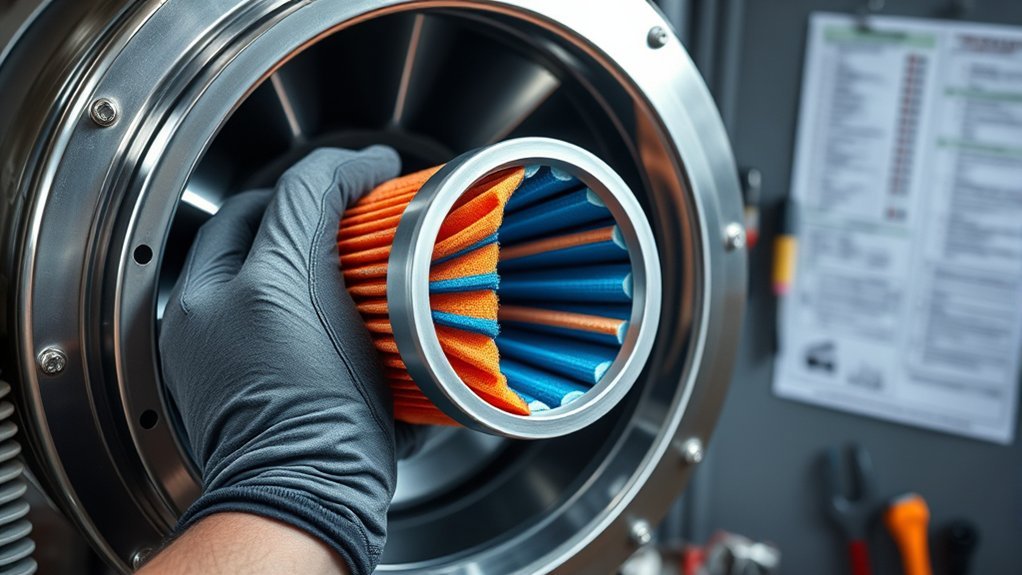
Since the air filter element directly impacts compressor efficiency and longevity, inspecting and replacing it at regular intervals is crucial for peak performance. Proper maintenance guarantees maximum airflow and prevents contamination. Understanding air filter types helps select the appropriate replacement. Regular checks should align with recommended filter replacement intervals, typically every 500 to 1,000 hours of operation or as specified by the manufacturer. Key steps include:
- Identify the type of filter (pleated, cartridge, or panel) and its condition.
- Clean or replace filters based on contamination levels and manufacturer guidance.
- Record maintenance activities to monitor filter lifespan and schedule timely replacements.
Adhering to these practices maintains compressor efficiency, reduces wear, and prolongs operational life. Accurate filter management is essential for consistent, high-quality performance.
Lubrication Best Practices: When and How to Oil Your Compressor
Proper lubrication is essential for maintaining ideal compressor performance and extending its operational lifespan. We recommend selecting oil with the appropriate viscosity for your compressor’s operating temperature and load conditions, guaranteeing optimal film strength and minimal friction. Adhering to precise lubrication intervals, typically outlined by the manufacturer, prevents oil degradation and reduces wear. Regularly check oil levels and top off as needed, avoiding overfilling. Use clean, high-quality oil to prevent contamination, which can compromise components. During scheduled maintenance, drain and replace the oil entirely to remove accumulated debris and guarantee consistent viscosity. Proper timing and method of lubrication directly influence compressor efficiency, reducing downtime and preventing costly repairs. Consistent adherence to these best practices ensures reliable operation and prolonged equipment lifespan.
Inspecting Hoses and Fittings for Leaks and Wear
After ensuring the compressor is properly lubricated, the next step is to verify the integrity of hoses and fittings. Regular inspection helps identify leaks and wear that can compromise performance. We focus on evaluating hose durability and fitting compatibility to prevent failures.
Ensure hoses and fittings are secure and undamaged to maintain compressor performance and safety.
Key steps include:
- Examine hoses for cracks, bulges, or signs of deterioration, as these indicate reduced hose durability.
- Check fittings for tightness and signs of corrosion or damage, ensuring proper fitting compatibility.
- Listen for hissing sounds or observe air leaks during operation, which suggest leaks at connections or compromised hoses.
Promptly replacing worn hoses and incompatible fittings maintains system efficiency, reduces downtime, and prevents safety hazards. This proactive approach ensures the compressor operates reliably and safely.
Monitoring Pressure Gauges and Safety Valves for Proper Function
Monitoring pressure gauges and safety valves is essential to guarantee the compressor operates within safe and ideal parameters. Regular pressure gauge calibration ensures accurate readings, allowing us to detect any discrepancies that may affect performance or safety. We should verify that the gauges reflect the actual pressure by comparing them with a known standard. Safety valve testing is equally critical; it involves checking that the valve opens at the designated set pressure to prevent over-pressurization. Proper functioning of safety valves protects personnel and equipment from potential failures. We need to perform these tests periodically, following manufacturer guidelines, and record the results. Consistent monitoring and maintenance of these components help maintain best compressor operation and ensure safety compliance.
Draining Moisture From the Air Receiver and Drain Valves Maintenance
To guarantee the air receiver remains free of accumulated moisture, we must regularly drain the tank and drain valves as part of routine maintenance. Effective moisture control relies on consistent drain valve maintenance to prevent corrosion and maximize compressor performance.
Key steps include:
- Manual draining of the receiver and drain valves daily or after periods of non-operation.
- Inspecting drain valves for leaks or blockages, replacing faulty components immediately.
- Ensuring proper functioning of automatic drain systems, verifying they activate correctly during operation.
Regular moisture removal minimizes rust formation and contamination, preserving compressor longevity. Proper drain valve maintenance is essential for maintaining dry compressed air, reducing downtime, and preventing costly repairs due to moisture-related damage.
Conducting Performance Tests to Ensure Compressor Efficiency
Performing routine performance tests is essential to verifying that our air compressors operate at ideal efficiency. These tests provide measurable data on key parameters such as air quality and noise levels, guaranteeing peak operation. We evaluate air quality by analyzing moisture content and particulate levels, which impact compressor performance and downstream processes. Noise level assessments help us identify excessive sound emissions that may indicate mechanical issues or misalignment. Accurate readings allow us to compare current performance against manufacturer specifications or baseline data, enabling early detection of inefficiencies. Consistent testing ensures the compressor maintains desired output, reduces energy consumption, and minimizes environmental impact. Ultimately, these performance evaluations serve as a critical control point for maintaining compressor reliability and efficiency.
Troubleshooting Common Air Compressor Problems
Troubleshooting air compressor issues requires precise identification of air leaks and pressure fluctuations. We systematically check for leaks in hoses and fittings, as even minor leaks can greatly impact performance. Addressing pressure inconsistencies promptly guarantees ideal operation and prevents equipment damage.
Identifying Air Leaks
How can we effectively identify air leaks that compromise compressor performance? The key is systematic inspection combined with monitoring air quality and noise levels. Air leaks often cause increased noise, reduced efficiency, and degraded air quality. To pinpoint leaks, we focus on these steps:
- Use a soapy water solution on fittings and hoses; bubbles indicate leaks.
- Listen for hissing sounds around connections and valves.
- Observe pressure drops over time without usage, signaling leakage.
Consistently identifying leaks improves compressor efficiency, reduces energy costs, and maintains ideal air quality. Addressing leaks also prevents fluctuations in noise levels, ensuring a safer and more reliable operation. Detection accuracy is crucial for effective maintenance and system integrity.
Addressing Pressure Fluctuations
Pressure fluctuations in an air compressor often indicate underlying issues that can compromise system stability and efficiency. To address these fluctuations, we first assess the causes affecting pressure stability. Common fluctuation causes include faulty pressure sensors, blocked or dirty intake filters, or inconsistent airflow due to worn valves or faulty pressure regulators. We verify the integrity of the pressure switch and confirm it cycles correctly. Regularly inspecting and cleaning intake filters prevents airflow restrictions that lead to pressure instability. Additionally, checking the pressure regulator for proper calibration helps maintain steady pressure levels. If fluctuation causes persist, replacing worn components or recalibrating sensors can restore pressure stability. Accurate diagnosis and timely adjustments are essential for ideal compressor performance and preventing system damage.
Creating a Maintenance Schedule to Keep Your Air Compressor in Top Condition
Have you established a thorough maintenance schedule for your air compressor? A structured plan guarantees peak performance and longevity. Key components include scheduled air compressor cleaning to prevent dust and debris buildup that can impair operation. Regularly inspect and update your spare parts inventory to ensure critical components, like filters and seals, are readily available, reducing downtime. To create an effective schedule:
Establish a maintenance schedule to ensure optimal performance and prolong your air compressor’s lifespan.
- Define routine tasks such as air compressor cleaning and filter replacements at specified intervals.
- Track maintenance activities and component replacements to identify patterns and predict future needs.
- Schedule periodic inspections of critical parts, including safety valves and pressure gauges, to maintain operational safety.
A well-organized maintenance schedule minimizes unexpected failures and enhances efficiency, keeping your air compressor in top condition.
Frequently Asked Questions
How Often Should I Replace the Air Compressor’s Oil?
We recommend replacing compressor oil every 1,000 hours or annually, whichever comes first. Ensuring proper oil viscosity and checking for oil contamination prevents damage, as in our case where contamination caused costly repairs, emphasizing regular oil changes.
What Are Signs of Imminent Air Compressor Failure?
We detect signs of imminent failure through leak detection and vibration analysis, noting unusual noises, excessive vibration, or pressure drops. Regular monitoring helps identify early issues, preventing costly breakdowns and ensuring the best compressor performance and longevity.
Can I Perform Maintenance Tasks Without Shutting Down the Compressor?
Performing maintenance without shutting down the compressor is like trying to fix a moving train; it jeopardizes operational safety and disrupts maintenance scheduling. Always shut down the system to guarantee precise, safe, and effective maintenance procedures.
How Do Environmental Conditions Affect Compressor Maintenance?
Environmental conditions greatly influence compressor maintenance; high humidity speeds up corrosion, necessitating corrosion prevention measures, while dust and extreme temperatures call for customized cleaning and cooling protocols to guarantee ideal performance and durability of equipment and components.
What Safety Precautions Are Necessary During Maintenance Procedures?
We see safety as our shield, so we always wear Personal Protective Equipment and follow Lockout/Tagout Procedures, ensuring maintenance is precise and secure. This discipline protects us, much like armor guarding essential machinery.
Conclusion
By adhering to this maintenance checklist, we keep our compressor’s heart beating steadily, warding off unexpected breakdowns like a vigilant guardian. Regular inspections and timely interventions act as the compass guiding us through the machinery’s intricate landscape. With each scheduled tune-up, we guarantee the engine of productivity runs smoothly, preventing costly failures and extending its lifespan. In this symphony of upkeep, precision and consistency are our most powerful notes for reliable, efficient operation.