Ad Blocker Detected
Our website is made possible by displaying online advertisements to our visitors. Please consider supporting us by disabling your ad blocker.
Did you know that rotary screw air compressors account for over 60% of industrial compressed air applications worldwide? These machines are essential in many sectors due to their continuous, smooth operation and energy efficiency. Understanding how they work and their key components can markedly impact your equipment selection and maintenance strategies. As we explore what makes rotary screw compressors a preferred choice, you’ll see why their design and performance are critical to operational success.
Key Takeaways
- Uses two interlocking helical screws to compress air continuously through positive displacement.
- Provides smooth, steady airflow ideal for industrial applications.
- Comprises main components like screw rotors, housing, lubrication system, and noise reduction features.
- Known for high efficiency, low maintenance, and reliable performance in continuous operation.
- Suitable for various industries requiring consistent, clean compressed air.
What Is a Rotary Screw Air Compressor and How Does It Work?
What exactly is a rotary screw air compressor, and how does it operate? It’s a positive displacement device that uses two interlocking helical screws—rotors—to compress air. As the rotors turn, air is trapped between the screw threads and the compressor housing, gradually reducing in volume. This design allows for continuous, smooth airflow, making it highly energy-efficient by minimizing energy loss during operation. Additionally, rotary screw compressors are engineered for noise reduction; their enclosed design and balanced rotors considerably lower operational noise levels. This combination of energy efficiency and quiet operation makes them ideal for continuous industrial use. The precise operation of the rotors ensures consistent air delivery, optimized for performance, reliability, and reduced energy consumption.
Key Components of a Rotary Screw Air Compressor Explained
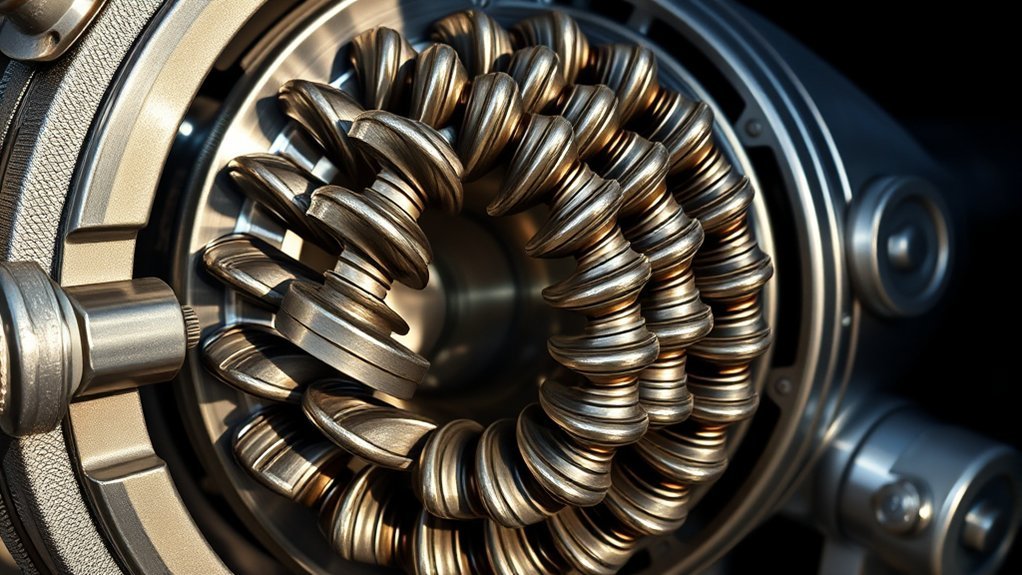
The key components of a rotary screw air compressor are essential for its efficient operation, and understanding their functions helps optimize performance. We will examine the main parts, including the rotors, housing, and lubrication system, to clarify their roles. This overview provides a foundation for understanding how these elements work together to generate compressed air effectively.
Main Components Overview
Understanding the main components of a rotary screw air compressor is essential for appreciating its efficiency and reliability. The core elements include the screw rotors, which compress air through meshing lobes, and the housing that contains and guides airflow. An integrated lubrication system guarantees smooth operation, reduces wear, and enhances energy savings. Additionally, the air-end design minimizes noise, contributing to noise reduction in the workspace. Key components include:
- Screw rotors for efficient compression
- Lubrication system for durability and energy efficiency
- Air-end housing for noise reduction and airflow management
Functionality of Parts
Since the core components of a rotary screw air compressor work together to guarantee efficient operation, understanding their individual functions is crucial. The lubrication system is essential for reducing friction between the rotors and other moving parts, preventing wear, and ensuring smooth operation. Proper lubrication also aids in heat dissipation, maintaining ideal operating temperatures. Noise reduction is achieved through the design of sound-attenuating enclosures and vibration-dampening mounts, which minimize operational sound levels. The compressor’s intercoolers and silencers further reduce noise emissions. Together, these parts work cohesively to enhance performance, longevity, and user comfort. Recognizing the role of each component enables better maintenance and operation, ensuring the compressor runs reliably and efficiently over its lifespan.
Advantages of Using Rotary Screw Compressors in Industry
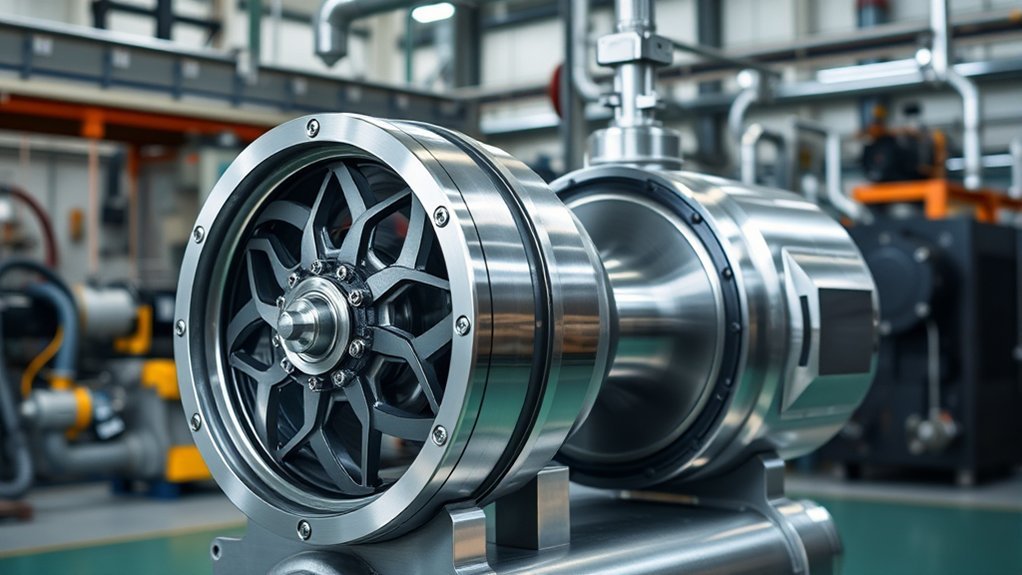
Rotary screw compressors offer high efficiency operation, reducing energy consumption and operational costs. They provide a consistent air supply essential for continuous industrial processes, ensuring reliability. Additionally, their low maintenance requirements minimize downtime and maintenance expenses, enhancing overall productivity.
High Efficiency Operation
The high efficiency operation of rotary screw air compressors stems from their ability to provide consistent, reliable performance with minimal energy consumption. This efficiency translates into significant energy savings and optimized operational costs. Key factors include the precision-machined rotors that reduce internal losses and adjustable inlet valves that optimize airflow based on demand. Additionally, their design inherently minimizes noise, contributing to noise reduction in industrial environments.
- Precise rotor design enhances energy efficiency
- Variable speed drives optimize power use
- Reduced mechanical losses improve overall performance
These features guarantee rotary screw compressors deliver superior energy savings and quieter operation, making them ideal for continuous industrial applications where efficiency and environmental considerations are paramount.
Consistent Air Supply
How do rotary screw compressors guarantee a steady flow of compressed air in industrial operations? They utilize synchronized helical rotors that continuously compress air, maintaining a uniform output regardless of demand fluctuations. This consistency ensures ideal air quality, reducing contamination risks for sensitive processes. Additionally, their design minimizes pressure fluctuations, which stabilizes air delivery. Noise levels are also controlled through integrated silencers and sound enclosures, making them suitable for noise-sensitive environments. To illustrate, consider the table below:
| Feature | Benefit |
|---|---|
| Continuous compression | Steady air supply, preventing process interruptions |
| Precise control | Maintains consistent pressure and flow |
| Air quality | Reduces contaminants and moisture in output |
| Noise management | Low operational noise levels |
| Reliability | Ensures long-term, stable performance |
This combination guarantees a reliable, high-quality, and quiet air supply essential for industrial applications.
Low Maintenance Needs
Maintaining consistent air supply is essential for uninterrupted industrial processes, and rotary screw compressors are designed to minimize operational downtime through their low-maintenance requirements. Their sealed design reduces the need for frequent parts replacement, ensuring reliable performance. This leads to significant energy savings by optimizing operational efficiency and reducing power consumption. Additionally, their noise reduction features minimize acoustic emissions, creating a safer and more comfortable work environment. Key benefits include:
- Minimal lubrication needs lower maintenance costs
- Continuous operation reduces scheduled downtime
- Built-in cooling systems enhance durability and longevity
These factors make rotary screw compressors a cost-effective choice, combining reduced maintenance with energy efficiency and quieter operation.
Different Types of Rotary Screw Air Compressors and Their Applications
Different types of rotary screw air compressors are designed to cater to specific industrial needs, distinguished primarily by their lubrication methods, cooling mechanisms, and control systems. Oil-injected compressors offer high energy efficiency and reliable lubrication, suitable for continuous operation, while oil-free models prioritize purity for sensitive applications. Cooling methods, such as air-cooled and water-cooled systems, impact operational stability and noise reduction, with water-cooled units generally providing quieter operation. Variable speed drive (VSD) compressors adapt output to demand, further enhancing energy efficiency and minimizing noise levels. Fixed-speed units are simpler but less efficient under variable loads. Understanding these variations allows us to select the most suitable compressor type, balancing energy consumption, noise reduction, and application-specific requirements for maximum efficiency.
How to Choose the Right Rotary Screw Compressor for Your Business
Selecting the appropriate rotary screw compressor for your business hinges on a clear understanding of your operational requirements, including factors such as airflow demand, pressure needs, and application sensitivity. To optimize performance, consider models that balance energy savings with noise reduction, ensuring efficient operation without disruptive sound levels.
- Airflow capacity aligned with peak demand cycles
- Pressure specifications suitable for your process parameters
- Features that enhance energy efficiency and minimize operational costs
Maintenance Tips to Keep Your Rotary Screw Compressor Running Efficiently
Regularly inspecting and servicing your rotary screw compressor is essential to sustain ideal performance and prevent costly breakdowns. Routine maintenance, including filter replacement and lubrication checks, maximizes energy savings by guaranteeing components operate at peak efficiency. Proper cooling system management reduces unnecessary strain, which can enhance noise reduction, creating a quieter work environment. Monitoring compressor temperature and pressure levels helps identify early signs of wear, allowing timely interventions that maintain optimal airflow and compression stability. Consistent maintenance also minimizes energy consumption, lowering operational costs. Additionally, keeping the compressor clean prevents dust and debris buildup that can impair performance. Implementing a preventative maintenance schedule ensures the compressor runs smoothly, delivering reliable airflow while reducing noise and maximizing energy efficiency over its lifespan.
Common Troubleshooting Issues and Solutions for Rotary Screw Compressors
Identifying and resolving common issues promptly can prevent minor problems from escalating into costly repairs or system failures. Common troubleshooting for rotary screw compressors often involves inspecting the air filter, lubrication system, and system pressures. A clogged air filter restricts airflow, causing increased energy consumption and reduced capacity. If the lubrication system fails, it may lead to overheating or component wear, risking compressor damage. Troubleshooting steps include checking for oil leaks, verifying oil levels, and inspecting filters for dirt or blockage. Additionally, irregular pressure readings or abnormal noise can signal issues with internal components or misaligned rotors. Regular maintenance and vigilant monitoring of critical components help prevent these problems and guarantee ideal compressor performance.
Frequently Asked Questions
What Is the Typical Lifespan of a Rotary Screw Air Compressor?
We find that with proper maintenance, a rotary screw air compressor typically lasts 10-15 years, but maintenance costs and replacement parts influence longevity. Regular servicing guarantees ideal performance and extends the compressor’s lifespan considerably.
How Energy-Efficient Are Rotary Screw Compressors Compared to Other Types?
We find rotary screw compressors highly energy-efficient, with lower energy consumption compared to reciprocating or centrifugal types, making them ideal for continuous operation. Their efficiency comparison highlights consistent performance and reduced operational costs over alternative compressor technologies.
Can Rotary Screw Compressors Operate Effectively at High Altitudes?
Did you know rotary screw compressors maintain over 95% efficiency at high altitudes? Their design guarantees reliable compressor altitude performance, adapting to thinner air, making them effective even at challenging elevations with minimal efficiency loss.
What Noise Levels Are Associated With Rotary Screw Air Compressors?
We find that rotary screw air compressors typically produce noise levels between 70 to 85 decibels, with sound emissions influenced by design and operational conditions. Proper enclosures and maintenance help minimize noise impact effectively.
Are There Environmental Considerations When Using Rotary Screw Compressors?
We consider environmental impact and emissions reduction essential when using rotary screw compressors, ensuring they operate efficiently with minimal emissions, reducing their ecological footprint, and complying with regulations, which ultimately promotes sustainable industrial practices.
Conclusion
In summary, choosing a rotary screw air compressor is like selecting the Swiss Army knife of industrial equipment—versatile, reliable, and surprisingly quiet. With proper maintenance, it’ll serve your business tirelessly, ensuring your operations stay smooth and efficient. Ignore the upkeep, and it’ll be as useful as a screen door on a submarine. So, invest wisely, keep it well-oiled, and enjoy the peace of mind that comes with knowing your compressed air needs are in capable, screw-driven hands.