Ad Blocker Detected
Our website is made possible by displaying online advertisements to our visitors. Please consider supporting us by disabling your ad blocker.
Maintaining an oil-free air compressor requires a systematic approach to guarantee ideal performance and longevity. We recognize the importance of inspecting components, managing filters, and monitoring system parameters to prevent failures. Proper maintenance can greatly reduce downtime and operational costs, but it involves detailed procedures that demand consistency and attention to detail. As we explore these practices, you’ll discover essential strategies to keep your compressor running reliably over time.
Key Takeaways
- Regularly inspect and clean compressor components, including seals, gauges, and cooling systems, to prevent wear and overheating.
- Replace air intake filters at recommended intervals to ensure optimal airflow and prevent contaminants from entering the system.
- Monitor system pressure and temperature consistently to maintain efficiency and detect early signs of malfunction.
- Use recommended lubricants and perform routine lubrication checks to reduce friction and extend compressor lifespan.
- Conduct vibration analysis and noise assessments to identify misalignments or component issues early and ensure reliable operation.
How to Inspect and Keep Compressor Components Clean
Regular inspection and cleaning of compressor components are essential for maintaining ideal performance and preventing costly breakdowns. We emphasize proper lubrication techniques during inspections to minimize wear and guarantee smooth operation. Regularly checking lubrication points and applying the correct oil or lubricant prevents friction buildup and overheating. Safety protocols must be strictly followed, including disconnecting power sources and wearing protective gear before handling internal parts. Keeping components clean involves removing dust, debris, and oil residues that can impair heat dissipation and component longevity. We also inspect seals, gauges, and cooling systems for signs of wear or contamination. By adhering to these practices, we assure the compressor operates efficiently without unexpected failures, ultimately extending its service life and reducing maintenance costs.
Regularly Change and Filter the Air Intake System
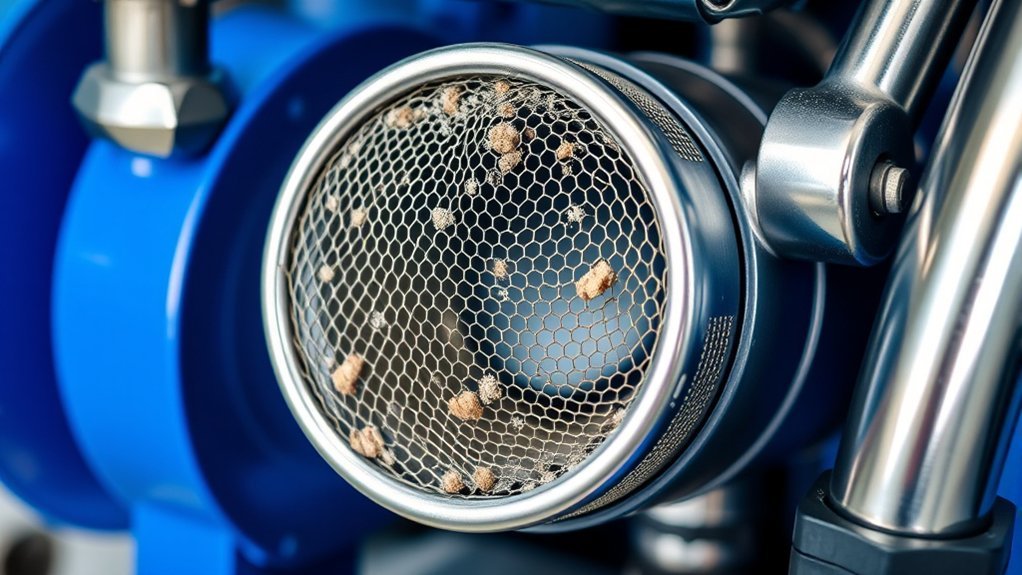
How often do we check and replace the air intake filters to guarantee peak compressor performance? Regular replacement of air intake filters is essential to maintaining ideal compressor airflow. Clogged or dirty filters restrict airflow, causing increased pressure drops and reducing efficiency. We recommend inspecting filters at least every 1,000 hours of operation or monthly, whichever comes first, especially in dusty environments. When filters become dirty or saturated, airflow decreases, leading to potential overheating and component strain. Proper filtration ensures contaminants are prevented from entering the compressor, preserving internal parts and extending lifespan. Consistent filter maintenance also minimizes energy consumption. By systematically replacing and filtering the air intake system, we sustain compressor efficiency, reduce downtime, and uphold reliable operation.
Monitor and Maintain Proper System Pressure Levels

Have you ever considered how maintaining ideal system pressure directly impacts compressor efficiency and longevity? Precise pressure control guarantees optimal system calibration and pressure stability, preventing unnecessary wear. Regularly monitoring pressure gauges helps detect deviations early. To visualize, consider this pressure profile:
| Ideal Pressure | Slight Deviations | Critical Overpressure |
|---|---|---|
| Maintaining targets ensures system calibration | Minor fluctuations occur naturally | Overpressure risks component damage |
| Consistent pressure maximizes efficiency | Unchecked deviations cause wear | Excess pressure leads to failures |
| Proper regulation extends lifespan | Pressure instability causes inefficiency | Safety hazards increase |
Troubleshoot Common Issues to Prevent Downtime
Detecting and resolving issues promptly is essential to maintaining ideal compressor performance and minimizing downtime. Common problems can often be traced to improper lubrication techniques or noise sources. To troubleshoot effectively:
Prompt detection and correction of lubrication issues and noise sources ensure optimal compressor performance.
- Inspect for abnormal noise levels, which may indicate bearing wear or lubrication failure, and address noise reduction strategies.
- Check lubrication points to guarantee proper application, preventing overheating and component fatigue.
- Monitor temperature fluctuations that could signal lubrication deficiencies or airflow obstructions.
- Examine air filters and vents for blockages affecting system efficiency.
- Conduct vibration analysis to identify misaligned or loose components, aiding early detection of potential failures.
Best Practices for Long-Term Oil-Free Compressor Care
Maintaining peak performance of oil-free compressors over the long term requires adherence to structured care practices that focus on system integrity and operational efficiency. Proper lubrication techniques are essential; using the recommended lubricants and ensuring consistent application prevents wear and maintains component lifespan. Regular inspection of seals, filters, and cooling systems helps avoid contamination and overheating, which can compromise performance. Additionally, implementing compressor noise reduction strategies—such as isolating vibrating components and installing sound-dampening enclosures—reduces operational noise and indicates mechanical health. Routine maintenance, including vibration analysis and pressure monitoring, enables early detection of issues. These practices collectively guarantee reliable operation, extend compressor longevity, and optimize efficiency, ultimately reducing downtime and maintenance costs.
Frequently Asked Questions
How Often Should I Schedule Professional Maintenance for My Oil-Free Air Compressor?
We recommend scheduling professional maintenance every 6 to 12 months, following a detailed maintenance checklist and considering replacement intervals for key components, to guarantee peak performance and prevent costly downtime of your oil-free air compressor.
What Are the Signs of Compressor Component Wear or Damage?
Think of your compressor as a patient; component inspection reveals wear indicators like unusual noises or temperature spikes, signaling damage. These signs help us identify early component wear, preventing costly repairs through proactive maintenance.
Can I Operate My Compressor in Extreme Weather Conditions?
Operating our compressor in extreme weather requires careful weather adaptation and environmental considerations. We assess temperature, humidity, and airflow conditions, implementing protective measures like enclosures or heaters to guarantee ideal performance and prevent damage during harsh conditions.
How Do I Safely Shut Down and Store the Compressor During Long Breaks?
When we shut down and store the compressor, we disconnect power to prevent drain and corrosion. We inspect components for wear, ensuring safe storage, and protect it from environmental factors, safeguarding longevity during long breaks.
Are There Specific Safety Precautions for Maintenance Tasks?
We prioritize hazard awareness and always wear personal protective equipment during maintenance tasks, ensuring safety by identifying potential risks, following proper procedures, and adhering to manufacturer guidelines to prevent accidents and equipment damage effectively.
Conclusion
By adhering to these maintenance practices, we guarantee our compressor’s health remains robust, like a well-tuned orchestra. Regular inspections and timely interventions act as the vigilant guardians of performance, preventing minor issues from snowballing into major failures. Think of maintenance as the steady heartbeat that sustains seamless operation. When we stay proactive and precise, we keep our compressor running smoothly—an indispensable engine powering our productivity with unwavering reliability.