Ad Blocker Detected
Our website is made possible by displaying online advertisements to our visitors. Please consider supporting us by disabling your ad blocker.
When we think about equipping a workshop, we often start with essential tools, but choosing the right pull-behind air compressor can considerably impact our efficiency. For instance, the VEVOR 13-Gallon Oil-Free Compressor offers quiet operation and durability, while the DEWALT model provides excellent mobility and power. But with so many options, how do we determine which compressor best suits our needs? There are key factors to take into account that might surprise you.
Key Takeaways
- Choose models with high PSI and SCFM ratings for powerful, efficient operation across various workshop tools.
- Prioritize durable construction with steel, aluminum, and brass fittings to withstand demanding workshop environments.
- Opt for units with mobility features like sturdy wheels and handles, ensuring easy maneuverability around the workspace.
- Consider models with quiet operation (around 66dB) for a comfortable, less disruptive workshop environment.
- Evaluate warranty coverage and long-term reliability to maximize investment value and reduce maintenance costs.
Air Compressor Whip Hose 3/8” x 10ft with Fittings
The FYPower Air Compressor Whip Hose 3/8” x 10ft is an ideal choice for professionals and DIY enthusiasts who need a durable, flexible hose that can handle demanding environments. Its hybrid construction offers excellent bend and kink resistance, ensuring smooth operation in tight spaces. Made from abrasion- and chemical-resistant materials, it maintains pliability from -40°F to 140°F. The solid brass fittings and quick coupler provide secure, easy connections to air tools and compressors. Tested to withstand 300 PSI working pressure and 1200 PSI burst pressure, this hose delivers reliable performance and long-lasting durability in automotive, industrial, and workshop settings.
Best For: DIY enthusiasts, automotive professionals, and industrial workers seeking a durable, flexible air compressor hose for demanding applications.
Pros:
- Excellent bend and kink resistance, ensuring smooth operation in tight spaces
- Made from abrasion- and chemical-resistant hybrid materials for long-lasting durability
- Supports high working pressure (300 PSI) and burst pressure (1200 PSI), ensuring safety and reliability
Cons:
- May be heavier than standard hoses due to robust construction
- Slightly higher cost compared to basic hoses with similar length
- Requires proper handling to prevent damage to fittings during heavy use
Hromee 25ft Polyurethane Recoil Air Hose with Coupler
The Hromee 25ft Polyurethane Recoil Air Hose with Coupler is perfect for users needing a lightweight, flexible hose that reduces kinks and tangles. Made from durable, anti-kink polyurethane, it resists abrasion, grease, and oil, ensuring long-lasting performance. Its self-coiling design makes deployment and storage quick and simple, while the bright red color improves visibility on busy sites. The double swivel brass ends with bend restrictors prevent kinking and extend the hose’s lifespan, supporting up to 120 PSI. Suitable for various air tools, this hose combines flexibility, durability, and ease of use—making it an essential addition to any workshop.
Best For: DIY enthusiasts, professional mechanics, and workshop workers seeking a durable, flexible, and easy-to-manage air hose for various pneumatic tools.
Pros:
- Self-coiling recoil design for quick deployment and tangle-free storage
- Made from abrasion, grease, and oil-resistant polyurethane for long-lasting durability
- Bright red color enhances visibility in busy work environments
Cons:
- Limited to a maximum pressure of 120 PSI, which may not suit heavy-duty industrial applications
- Slightly heavier than some rubber hoses, at approximately 1.2 pounds for 25 feet
- May require careful handling to avoid kinks in sharp bends despite recoil feature
VEVOR 13-Gallon Oil-Free Air Compressor, 2HP
Ideal for professionals and DIY enthusiasts alike, the VEVOR 13-Gallon Oil-Free Air Compressor delivers quick, reliable power with minimal maintenance. Its large 13-gallon tank and 2HP motor provide rapid air buildup in under 3 minutes, with a maximum pressure of 125 PSI and an airflow of 4.6 SCFM@90PSI. Built from durable steel and aluminum, it guarantees stability and longevity, while its noise level of 66dB keeps operation quiet. With features like pressure gauges, plastic filters, rubber wheels, and a leak-proof valve system, it’s ready for a variety of tasks—whether auto repairs, woodworking, or spray painting—making it a versatile addition to any workshop.
Best For: DIY enthusiasts and professionals needing a portable, durable air compressor for various tasks like auto repairs, woodworking, and spray painting.
Pros:
- Rapid air buildup in under 3 minutes, increasing work efficiency
- Quiet operation at 66dB, suitable for noise-sensitive environments
- Durable construction with steel and aluminum, ensuring longevity
Cons:
- Heavier weight of around 71 pounds, potentially impacting portability
- Limited to 120V power supply, restricting use in some regions
- May require regular maintenance of the leak-proof valve system for optimal performance
Factors to Consider When Choosing Pull Behind Air Compressors
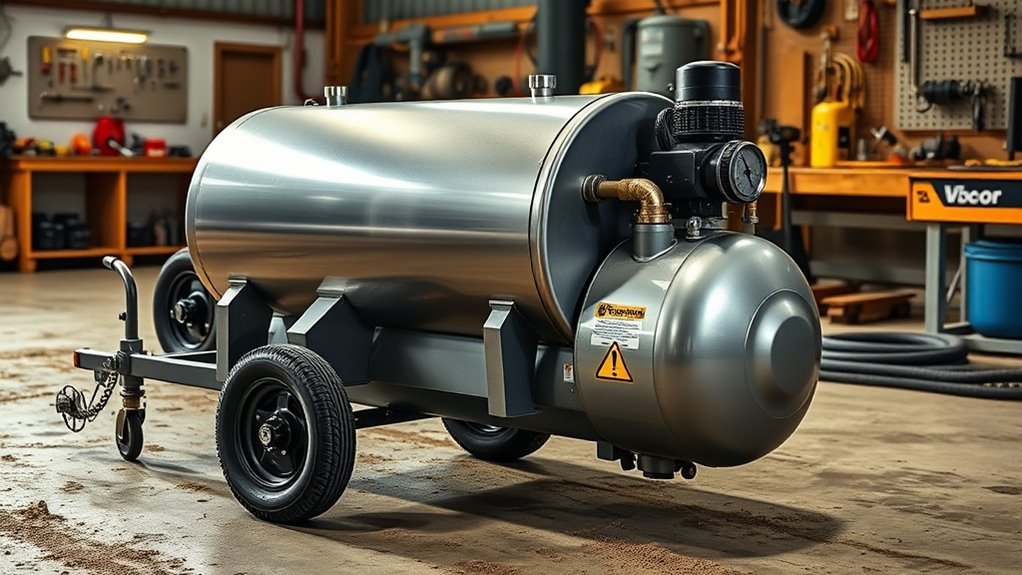
When selecting a pull-behind air compressor, we need to take into account several key factors to ensure it meets our needs. From power and portability to durability and compatibility, each aspect influences performance and value. Let’s explore these points to help you make an informed choice.
Power and Performance
How do you guarantee your pull-behind air compressor delivers the power you need? First, check that it provides sufficient PSI to handle your tools and applications. A compressor with a high airflow capacity (measured in SCFM) ensures consistent performance during extended or continuous use. Pay attention to the motor’s horsepower; higher HP usually means more power and better efficiency. Also, verify the maximum working pressure exceeds your most demanding tasks to avoid performance issues. It’s essential to evaluate how well the compressor maintains performance under load, especially during prolonged operation. A reliable power and performance setup means your tools run smoothly, efficiently, and without interruption, keeping your workflow steady and productive.
Portability Features
Ever wondered what makes a pull-behind air compressor truly portable? It starts with a lightweight, compact design that’s easy to move. Look for models with sturdy wheels and a balanced frame, so you can navigate different surfaces without hassle. Handles and shoulder straps add extra convenience for frequent transport. Flexible hoses that coil easily help prevent kinks and tangles, making storage simpler. Keep an eye on the overall weight—lighter units require less effort to move and don’t need special equipment. Recoil hoses and integrated handles are bonus features that enhance portability. Ultimately, a portable compressor combines a manageable weight, thoughtful design, and accessories that make moving it around your workshop effortless and efficient.
Durability and Materials
Choosing a pull-behind air compressor that lasts requires paying close attention to the materials used in its construction. High-quality steel tanks and aluminum components resist corrosion and wear, extending the compressor’s lifespan. Durable hoses and fittings made from brass or reinforced hybrid materials withstand abrasion, chemicals, and extreme weather conditions. Opting for compressors with robust, oil-free or oil-lubricated pump systems helps prevent early failure from internal wear or corrosion. Heavy-duty, leak-proof valves and seals ensure reliable performance over time, even with frequent use. Additionally, weather-resistant coatings and corrosion-resistant finishes on external parts maintain structural integrity and functionality in diverse environments. Overall, investing in quality materials greatly enhances the durability and longevity of your pull-behind air compressor.
Compatibility and Fittings
Selecting the right pull-behind air compressor involves ensuring that its fittings are compatible with your existing tools and hoses. Most tools require standard sizes like 1/4 inch or 3/8 inch, so verifying these is essential. You should also check that the quick-connect couplers support the specific connection types you need, whether for industrial or automotive use. Durability matters too—look for fittings made from brass or steel to resist corrosion and wear over time. Additionally, hose fittings should include bend restrictors or swivel joints to prevent kinking and make connections easier. Finally, consider if you’ll need adapters or couplers to match different brands or air tools, ensuring seamless integration with your current equipment.
Price and Warranty
Price and warranty are vital factors when evaluating pull-behind air compressors because they directly affect your overall investment and long-term reliability. The price varies widely depending on capacity, features, and brand reputation, making it essential to choose one that fits your budget without sacrificing quality. A thorough warranty offers peace of mind, covering repairs or replacements from manufacturing defects, often ranging from 1 to 5 years. Longer warranties typically indicate higher confidence from manufacturers in their product’s durability. It’s important to compare what’s covered, including parts and labor, to guarantee full protection over the compressor’s lifespan. Together, price and warranty help you find a balance between initial cost and long-term savings, ensuring you get the best value for your investment.
Frequently Asked Questions
What Maintenance Is Required for Pull-Behind Air Compressors?
We check oil levels regularly, drain moisture from tanks, inspect belts and hoses, clean filters, and guarantee proper tire pressure. Consistent maintenance keeps our pull-behind air compressors running efficiently and extends their lifespan, saving us time and money.
How Loud Are These Air Compressors During Operation?
We find pull-behind air compressors typically operate between 70 to 85 decibels, similar to a loud conversation or vacuum cleaner. For example, a workshop reported noise levels causing minor discomfort during extended use.
Can These Compressors Run Multiple Tools Simultaneously?
Yes, these compressors can run multiple tools at once, but it depends on their power and airflow capacity. We recommend checking the CFM ratings to verify they meet your tools’ combined requirements for smooth operation.
What Is the Typical Lifespan of a Pull-Behind Air Compressor?
Like a steady heartbeat, a pull-behind air compressor typically lasts 10 to 15 years with proper maintenance. We believe it’s a reliable companion, symbolizing durability and consistent performance in your workshop’s ongoing work rhythm.
Are There Any Safety Precautions Specific to Pull-Behind Models?
Yes, there are safety precautions specific to pull-behind models. We always guarantee proper hitching, secure connections, and regular maintenance, and we stay alert to avoid accidents during operation. Safety is essential for everyone’s well-being.
Conclusion
In conclusion, selecting the appropriate pull-behind air compressor hinges on your workshop’s particular requirements. For example, a compact auto repair shop might gain from the VEVOR for quiet, dependable operation, while a bustling industrial environment might opt for the high CFM output of the Ingersoll Rand. By taking into account factors such as portability, durability, and performance, you can guarantee your investment maintains your projects operating seamlessly—just like a hypothetical shop that upgraded to the DEWALT for enhanced efficiency.